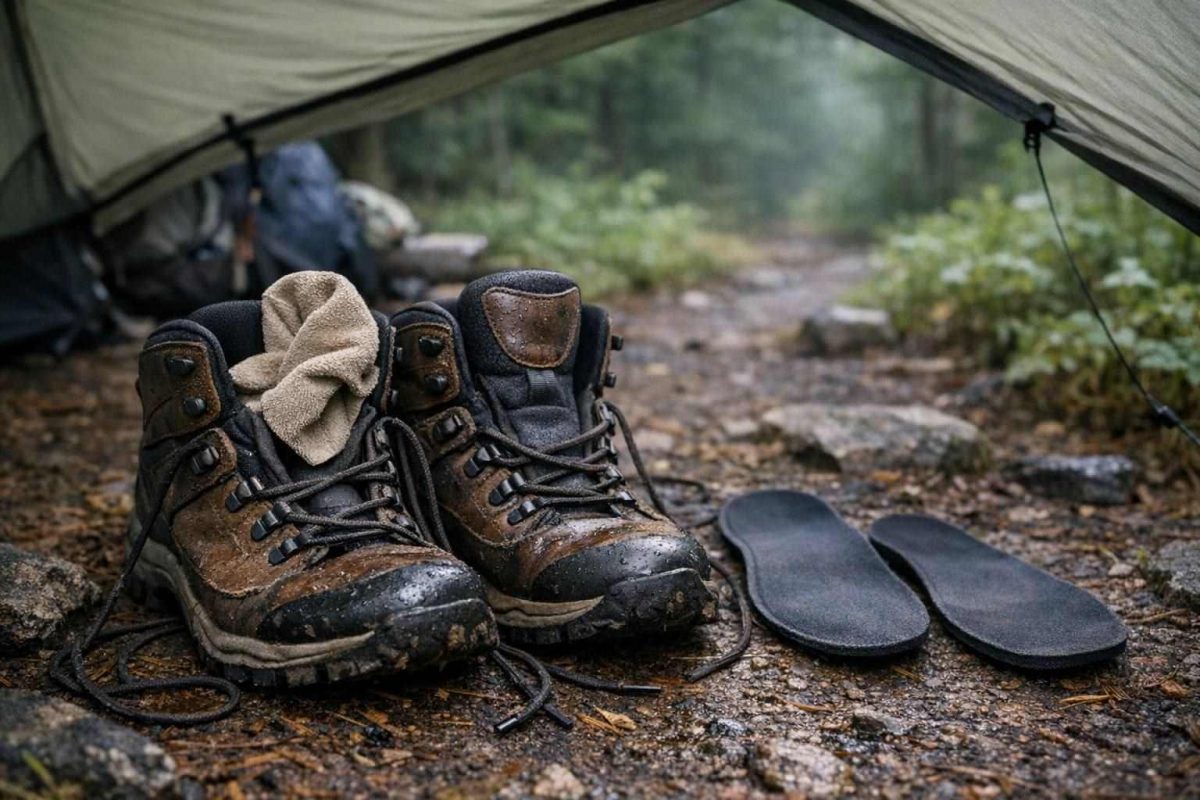
When out on a long multi-day trip, wet boots are so much more than an irritation. Not only can they cause hot spots, soften skin, reduce tread on paths and generally make every morning so much harder to face but also by preparing for moisture before you go and then managing it as early as possible, you can avoid that dreaded cold and heavy feeling in the linings of your boots later in the day.
Start with the conditions, not the label
While waterproof footwear is great for short river crossings, occasional wet hikes, or even long, wet days of hiking through pour rain, every boot leaks some where; whether it is over the top of the cuff, through some poorly stitched seam, or around poorly fitting gaiters; or even more insidiously through the shoe's membrane as your sweating feet create a huge amount of moisture that the waterproof and breathable membrane is unable to evaporate.
If choosing a waterproof boot, choose one that is suitable for your trip. A very stiff and heavily insulated boot may be suitable for very cold weather but may be very tiring on long approaches. On the other hand a lighter hikers shoe may dry out more quickly on warmer days and be more comfortable but will not offer the same level of protection in very wet or rough conditions. Consider the temperature, the amount of precipitation you expect, cross country sections, the surface you will be hiking on, the weight of your pack and how far you will be from your dry shelter.
Inspect footwear before you pack it and pay attention to the soles, the bonding between parts, eyelets, tongue and collar. Test if the sole isn't too worn to provide sufficient traction and if the heel doesn't come loose when you're walking uphill. Boots that have been in storage for a long time can be inspected for cracks and for signs of aging adhesives when flexed.
Build a moisture plan into your pack
Pack dry socks for camp in a waterproof liner or in separate, sealed bags within your pack even if the main part of your pack is water-resistant. Bring at least one change of dry socks for sleeping. It is best to use a different pair of very light hiking socks for a short evening walk and change into your camp socks at camp.
A small, absorbent cloth can be used to wipe surface moisture from boots and dry out condensation in them. In addition to specialized, bulky drying apparatuses found in outdoor stores, a few strips of repair tape, spare laces and a small, lightweight bag to store wet footwear in can also be of value in preventing one wet item from spreading moisture to other items of clothing and insulation that you are carrying.
Use the rain layers and the footwear for water crossings near the top of your pack so they are easy to get to. Only carry the second pair of very lightweight boots for camp or easy travel on very wet days and weigh them up against the amount of weight they will add to your pack and the impact that it will have on you should something happen to them on the trip.
Dry boots without damaging them
First, remove the insoles from your boots. Open up the laces so that the boot can be shaken out and then turn soles up and blot boot exteriors with a towel. Then, stick the boots out in well-ventilated areas of campsites or outdoors. For drying boots, try stuffing them loosely with paper or other absorbent materials and then pulling them out when they become damp. Do not use these absorbent materials for anything else once they have become damp.
Don't put your boots near a stove, campfire, heater or other extremely hot surface. Heat can make leather stiff, cause separated adhesives to bond even more, cause individual components to shrink, and severely damage a boot's waterproof membrane. Warm air is good for drying boots but intense heat is bad. Don't dry your boots by the fire if they feel hot to the touch.
Remember that drying your boots out takes longer than one evening. Even though you may be at camp for only one night, start to prepare your boots as soon as possible for drying out. When on short trips and you are out for the day open up your boots to allow moisture to escape. Store your boots in a protected area from rain and ground dampness but allow for good airflow. Never store wet boots in a closed bag.
Protect feet while the problem is still small
Ditch the wet socks as soon as they start to get so wet that they cause rubbing. Check your feet for any signs of wear and tear such as smooth areas of skin, any signs of blisters and any creases in your socks.
As for the type of liners to use, there are many types of breathable sock liners on the market, some of which reduce friction on feet greatly. Others use simple well-fitting socks that don't include any extra layers. Because of the different boot volumes, foot shapes, and temperatures that there are, it is best to test out different sock liners before you head out on your long trip for hikers.
Do not store wet boots near your insulation. Damp socks must be stored in separate waterproof bags from your sleeping gear, including socks, gloves, hats and down filled items. If your feet are cold, sore, or even feel numb then stop and sort the problem out. Remember cold and wet conditions can be a serious safety problem. Plan your route according to the local current conditions and don't be afraid to change them if needed.
Set a camp routine that prevents repeat soaking
When crossing wet ground, cross it with a plan. Use gaiters if they fit your boots and the terrain, and go slowly over water-saturated terrain. Try to place the center of the sole of your boot on the ground with each step. Secure any loose items when you cross streams, and take time to change and dry your wet boots and socks at your camp site. If you judge that water-saturated terrain is too difficult to cross safely, head back the way you came or take an alternative route.
Air out your boots as soon as you reach camp, remove any mud from your boots before it dries into the soles and seams, change into your warmest socks and keep any wet clothes away from rest of your gear to stop it from soaking. When storing your wet gear in your tent or shelter do not block any ventilation and make sure that you do not create any condensation by storing your wet gear up against your sleeping bag and sheets.
Checking a few points each evening will be enough: are soles still stuck together? Are there any spots on feet where skin is getting rubbed? Do one have enough dry socks for the following day? And – most importantly – will one be able to wear said boots for the following day's trek or not? Good outdoor trip preparation does not guarantee that a trip will be entirely dry; but it does give a hiker more choices when bad weather decides to turn up.